







 > 국내도서 요약 > > 국내도서 요약 > |
국내도서 요약 |
| 경제경영전체 |
| 경영자스토리 |
| 리더십 |
| 경영전략/혁신 |
| 마케팅 세일즈 |
| 트렌드/미래예측 |
| 경제 |
| 재테크/투자 |
| 창업/취업 |
| e-비즈니스 |
| 자기계발 |
|
| 인문교양전체 |
| 인문학 |
| 역사 |
| 사회과학 |
| 자연과과학 |
| 예술/대중문화 |
| 인물/평전 |
| 종교 |
| 교육/육아/학습 |
| 여행/취미/건강 |
| 산문/에세이/논픽션 |

 > 오디오북 > 영어오디오북
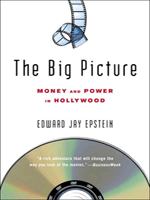
- The Big Picture
- 저 자 Edward Jay Epstein
- 출판사 Random House Publishing Group
- 가 격 $15.95(252 Pages)
- 출판일 2005년 05월


본 도서요약본은 네오넷코리아가 해당 출판사의 허가 및 검수를 거쳐 제작된 컨텐츠입니다. - 저작권 관련 문의처 : 해냄법률사무소 황도수변호사 02)541-7233

The Big Idea
The golden years of the American motion picture industry - from 1930 to the
1950s, was when the studio system held sway. All the money, prestige and power
of the industry were derived from just one activity: selling tickets at the box
office. Nowadays it is very different; the movie business is just a small
component of an immense synergistic moneymaking industry. The media universe’s
reach extends from the silver screen to home television, recorded media and the
Internet, and even to such arenas as theme parks. Unlike in the old system, film
studios nowadays make enormous profits from this vast assortment of disparate,
albeit related, industries, such as video-game spin-offs and soundtracks. Ticket
sales count for a tiny slice of the pie, if at all.
Regardless of how profit-oriented it may be, Hollywood, however, is of course not just about making money. While profit is undoubtedly the driving force behind the movie industry, its social and political milieus - the behind-the-scene dynamics that make Hollywood tick, and which are defined by their major players’ search for power and prestige - can neither be ignored nor neglected if one wants to arrive at a true understanding of Hollywood.
This book, then, is an attempt to make
sense of Hollywood - to provide a ‘big picture’ understanding of it, so to speak
- making use of the perspective explained above.
About the
Author
Edward Jay Epstein - Edward Jay Epstein was born in New York
City in 1935. He attended Cornell University, where he received a B.A. and an
M.A. His Masters thesis in government became the highly influential Inquest:
The Warren Commission and the Establishment of Truth, which examined the working
of the Warren Commission and was its first real critique. It created a sensation
when it first appeared in 1966 about the same time as Mark Lanes classic Rush
to Judgment.
Mr. Epstein followed up Inquest with Counterplot: The Garrison Case and then in 1978 with Legend: The Secret World of Lee Harvey Oswald, which was published by Readers Digest Press. In 1972 he received his Ph.D. in government from Harvard, and afterward taught political science there as well as at MIT and UCLA. He later returned to New York, where he works as a writer. Other books he as written include News from Nowhere, Agency of Fear, and, more recently, Dossier: The Secret History of Armand Hammer, published by Random House in 1996.