







 > 국내도서 요약 > > 국내도서 요약 > |
국내도서 요약 |
| 경제경영전체 |
| 경영자스토리 |
| 리더십 |
| 경영전략/혁신 |
| 마케팅 세일즈 |
| 트렌드/미래예측 |
| 경제 |
| 재테크/투자 |
| 창업/취업 |
| e-비즈니스 |
| 자기계발 |
|
| 인문교양전체 |
| 인문학 |
| 역사 |
| 사회과학 |
| 자연과과학 |
| 예술/대중문화 |
| 인물/평전 |
| 종교 |
| 교육/육아/학습 |
| 여행/취미/건강 |
| 산문/에세이/논픽션 |

 > 오디오북 > 영어오디오북
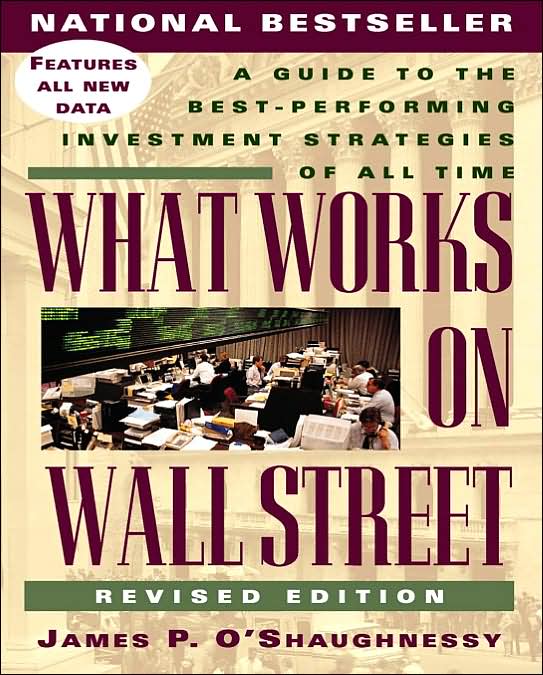
- What Works on Wall Street
- 저 자 James O
- 출판사 McGraw-Hill Trade
- 가 격 $24.39(325Pages )
- 출판일 1998년 05월


본 도서요약본은 네오넷코리아가 해당 출판사의 허가 및 검수를 거쳐 제작된 컨텐츠입니다. - 저작권 관련 문의처 : 해냄법률사무소 황도수변호사 02)541-7233

■ The Big Idea
It is
amazing to reflect how little systematic knowledge Wall Street has to draw upon
as regards the historical behavior of securities with defined characteristics.
We do, of course, have charts showing the long-term price movements of stock
groups and individual stocks. But there is no real classification here, except
by type of business. Where is the continuous, ever growing body of knowledge and
technique handed down by the analysts of the past to those of the present and
future? When we contrast the annals of medicine with those of finance, the
paucity of our recorded and digested experience becomes a reproach. We lack the
codified experience which will tell us whether codified experience is valuable
or valueless. In the years to come we analysts must go to school to learn the
older established disciplines. We must study their ways of amassing and
scrutinizing facts and from this study develop methods of research suited to the
peculiarities of our own field of work. - Ben Graham, 1946
What Works on Wall Street, by James P. OShaughnessy has been around only since 1998, but has already been hailed as one of the great classics of investment. OShaughnessy was the first person not an employee of Standard and Poors to gain access to the S&P Compustat Database, the most important and complete repository of fundamental and technical stock data in the world. The project that inspired this book was to computer backtest the data using various fundamental formula searches in order to find out what styles of investment have actually made profits in the last 50 years or so. It is a huge book, 366 pages long, so this little summary here hardly does it justice. This book is not just good, it is downright momentous, an amazing book that cuts through a century of Wall Street lore to show exactly what techniques pay off, you absolutely must get a copy and read it!!! In very brief form, this is what OShaughnessy found.
Small capitalization strategies owe their superior returns to microcap stocks with market capitalization below $25 million. These stocks are too small for virtually any investor to buy.
Buying stocks with low PERs is most profitable when you stick to larger, better known issues.
Price-to-Sales ratio is the best value ratio to use for buying market-beating stocks.
Last years biggest losers are the worst
stocks to buy this year.
Last years earnings gains alone are worthless in
determining what the stock will do this year.
Using several factors dramatically improves investment performance.
You can beat the S&P 500 by four times if you concentrate on large, well-known stocks with high dividend yields.
Relative strength is the only growth variable that consistently beats the market.
Buying the most popular issues with the highest PERs is one of the worst approaches.
Risk is one of the most important elements to consider in a strategy.
Combining growth and value strategies is
the best way to improve your investment
performance.