







 > 국내도서 요약 > > 국내도서 요약 > |
국내도서 요약 |
| 경제경영전체 |
| 경영자스토리 |
| 리더십 |
| 경영전략/혁신 |
| 마케팅 세일즈 |
| 트렌드/미래예측 |
| 경제 |
| 재테크/투자 |
| 창업/취업 |
| e-비즈니스 |
| 자기계발 |
|
| 인문교양전체 |
| 인문학 |
| 역사 |
| 사회과학 |
| 자연과과학 |
| 예술/대중문화 |
| 인물/평전 |
| 종교 |
| 교육/육아/학습 |
| 여행/취미/건강 |
| 산문/에세이/논픽션 |

 > 오디오북 > 영어오디오북
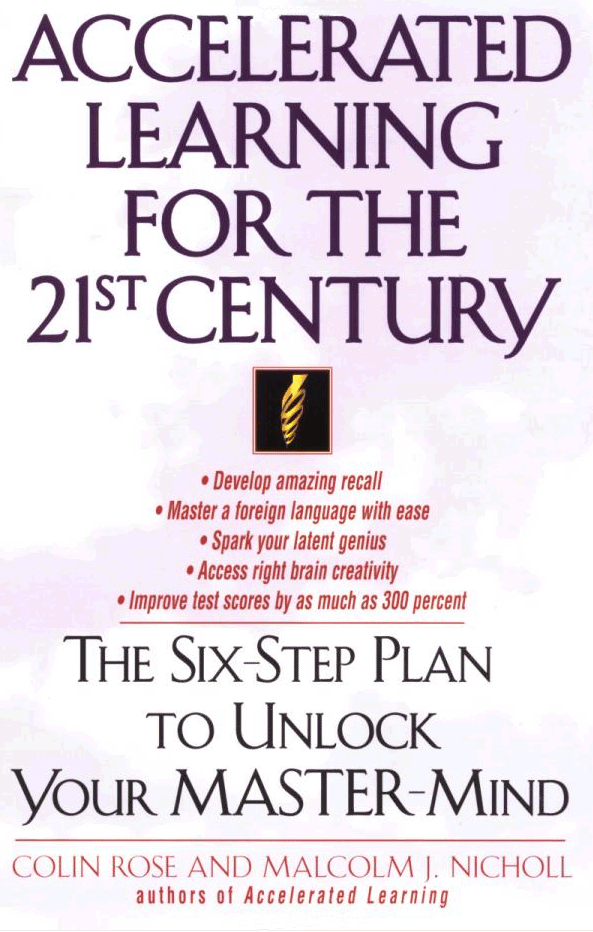
- Accelerated Learning for the 21st Century
- 저 자 Colin Rose and Brian Tracy
- 출판사 Dell Pub Co
- 가 격 $17.00(403 Pages)
- 출판일 1997년 01월


본 도서요약본은 네오넷코리아가 해당 출판사의 허가 및 검수를 거쳐 제작된 컨텐츠입니다. - 저작권 관련 문의처 : 해냄법률사무소 황도수변호사 02)541-7233

■ The Big IDEA
This package is a
combination of six cassette tapes along with a workbook and other handouts.
Colin Rose is a British expert on accelerated learning techniques and Brian
Tracy is a well-known U.S. peak performance coach. According to Rose and Tracy,
intelligence is not fixed, it is like a muscle that can be developed, and
learning how to learn is the key. The authors cite several examples where
corporations have successfully used these techniques to improve their employees
learning capacity. For example, one major telephone company cut their training
in half with some of the accelerated learning techniques described in this
package.
All information enters the brain through one of the five senses.
The majority of this information processing is through touch (kinesthetic),
sight (visual) or sound (auditory), and most people rely more heavily on one of
these methods, (kinesthetic - 40%, visual - 35%, auditory -25%). It is best to
use all three if possible (multi -sensory learning). For example you could read
the learning material out loud (auditory), view graphic images related to the
topic (visual) and feel actual samples of a related item
(kinesthetic).
Professor Howard Gardner of Harvard has identified seven intelligences, or aptitudes. These include: Linguistic intelligence, Math and logical intelligence, Visual/spatial intelligence, Musical intelligence, Interpersonal intelligence, Interpersonal intelligence, and Bodily intelligence. Unfortunately, traditional education only uses a few of the. Gardner recommends using at least two to three of them whenever possible to maximize learning.
■ About the Author
Colin Rose is
founder and chairman of Accelerated Learning Systems, and consults with many
universities and corporations such as Motorola, Xerox, and IBM. He lectures
frequently at conferences and symposiums across the globe. In the United Kingdom
he is working at a government level to set up a national network of centers for
parent education and is a member of the steering committee of the Learning
Society, a collaborative undertaking of the British government, the Royal
Society for the Arts, and industry. He lives in England.
Brian Tracy (born in Canada in 1944) is a self-help author who has recorded many of his works as audio books. His talks and seminar topics include leadership, sales, managerial effectiveness, and business strategy.
When he was 30 he attended the University of Alberta, eventually earning a masters degree in business; he is now the Chairman of Brian Tracy International, a human resource company based in Solana Beach, California, with affiliates throughout the United States and in thirty-one other countries.
In 1981 Brian assembled his "success system" called The Phoenix Seminar. Three years later he released the seminar as a self-help audio tape called "The Psychology of Achievement".
Tracy is a member of the board of trustees for the Heritage Foundation, an influential Washington, D.C.-based public policy research institute.[1]
Much of Tracys self-help material is based on the works of other "success" gurus such as Earl Nightingale, Jim Rohn and Denis Waitley. He has recently launched Brian Tracy University, an online syllabus designed to focus primarily on entrepreneurs, business owners and sales professionals. The Brian Tracy College of Management and Entrepreneurship at the distance learning school Andrew Jackson University is named after him.