







 > 국내도서 요약 > > 국내도서 요약 > |
국내도서 요약 |
| 경제경영전체 |
| 경영자스토리 |
| 리더십 |
| 경영전략/혁신 |
| 마케팅 세일즈 |
| 트렌드/미래예측 |
| 경제 |
| 재테크/투자 |
| 창업/취업 |
| e-비즈니스 |
| 자기계발 |
|
| 인문교양전체 |
| 인문학 |
| 역사 |
| 사회과학 |
| 자연과과학 |
| 예술/대중문화 |
| 인물/평전 |
| 종교 |
| 교육/육아/학습 |
| 여행/취미/건강 |
| 산문/에세이/논픽션 |

 > 오디오북 > 영어오디오북
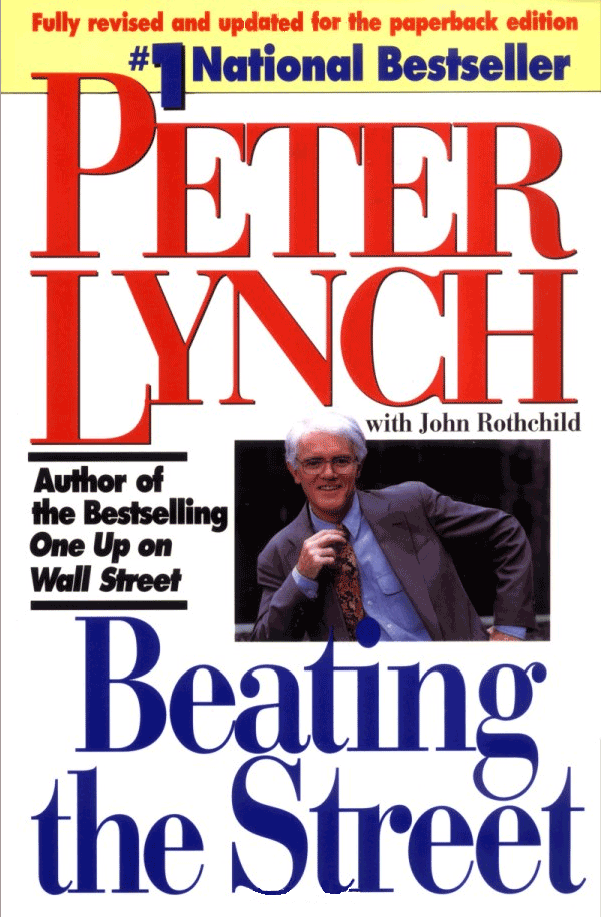
- Beating The Street
- 저 자 Peter Lynch
- 출판사 Fireside
- 가 격 $15.00(332 pages)
- 출판일 1994년 01월


본 도서요약본은 네오넷코리아가 해당 출판사의 허가 및 검수를 거쳐 제작된 컨텐츠입니다. - 저작권 관련 문의처 : 해냄법률사무소 황도수변호사 02)541-7233

■ The Big Idea
Peter
Lynch ran the Fidelity Magellan Fund for more 20 years, during which time
Magellan was the number one ranked general equity fund in America. His books One
Up on Wall Street and Beating the Street are filled with his accumulated wisdom
and in Beating the Street he gives a fairly detailed account of how he did his
analysis.
The first thing that will strike new investors as strange is that Lynchs methods are actually so simple that mostly an amateur could use them entirely unchanged and with the same results. Lynch does not use any gimmicky computer programs, either to pick stocks or optimize the portfolio for volatility. Each and every company invested in by Magellan was considered on its own individual merits, and the managers of Magellan generally did their very best to completely avoid investing in anything that consensus opinion from the average Wall Street analyst declared was a good thing.
Lynch sums up his points in Beating the Street with a number of humorous "Peters Principles", which appear here. Do take the time to read Beating the Street in its entirety though, as he makes a number of very interesting points throughout.
■ About the
Author
Peter Lynch, Newton, Massachusetts, in 1944. Fidelity
Investments, Inc., Fidelity Management & Research Company
Most
Famous For: Peter Lynch managed the Fidelity Magellan Fund from 1977 to 1990,
during which time the funds assets grew from $20 million to $14 billion. More
importantly, Lynch reportedly beat the S&P 500 Index benchmark in 11 of
those 13 years, achieving an annual average return of 29%.
He is also famous for several books including,
"One Up On Wall Street" (1989) and "Beating The Street" (1993), which are widely
considered to be mandatory reading for any investor.
Personal
Profile
Lynch graduated from Boston College in 1965 with a degree in finance.
He served two years in the military before attending and graduating from the
Wharton School at the University of Pennsylvania with a Master of Business
Administration in 1968.
He went to work for Fidelity Investments as an investment analyst, eventually becoming the firms director of research, a position he held from 1974 to 1977. Lynch was named manager of the little known Magellan Fund in 1977 and achieved historic portfolio results in the ensuing years until his retirement in 1990.
In 2007, Peter Lynch was serving as vice-chairman of Fidelitys investment adviser, Fidelity Management & Research Co. Since his retirement, he has been an active participant in a variety of philanthropic endeavors.
Investment Style
Often described as a
"chameleon," Peter Lynch adapted to whatever investment style worked at the
time. It is said that his work schedule, the equivalent of what we would call
today "24/7," did not have a beginning and an end. He talked to company
executives, investment managers, industry experts and analysts around the clock.
Apart from this punishing work ethic, Lynch did consistently apply a set of eight fundamental principles to his stock selection process. According to an article by Kaushal Majmudar, a CFA at The Ridgewood Group, Lynch shares his checklist with the audience at an investment conference in New York in 2005:
Publications
"One Up On Wall Street" by Peter
Lynch with John Rothchild (1989)
"Beating The Street"Peter Lynch with John
Rothchild (1993)
"Learn To Earn"Peter Lynch with John Rothchild (1996)
Quotes
"Go for a business that any idiot can
run ? because so